

The cost: what handling it alone is doing to you
It's 11pm. You're on the couch. The thought crosses your mind: maybe I should talk to someone.
In the next ten seconds, you fight it. Reaching out feels like admitting something's wrong, admitting something is out of your control, admitting you can't manage it anymore. And admitting THAT feels like weakness. It makes you feel like you're not man enough. Like you failed at being strong. And you don't want to fail.
So... you don't make the call. You doomscroll... You grab a beer or smoke a joint... You play video games… And the feeling gets buried. Aguántate. Hold it in.
Night after night, it costs you. Your sleep falls apart. You drag through the day exhausted. Work is just a paycheck. Your friendships stay on the surface: just drinks and jokes, but you have nowhere to be real. Motivation is hard to find. And you feel distant from everyone you care about.
Puerto Rican psychologist Dra. Jennifer Pérez Rivera calls that buildup la olla de presión, the pressure cooker, and she says talking about what's inside is the release valve, la válvula de escape (Conecta Puerto Rico, 2026). But the valve stays shut, because the rule you absorbed over your lifetime was: no puedes fallar. You can't fail. You can't ask for help.
My mom had a word for what the valve does: desahogarse, to stop drowning, to get it off your chest.
You're not alone in this feeling. The share of American men who say they have no close friends rose from 3 percent in 1990 to 15 percent in 2021 (Cox, 2021). In a large UK study of nearly 280,000 adults, men who were both lonely and socially isolated were estimated to live about 5.8 fewer years free of depression and anxiety from age 50 than men who were neither (Wang et al., 2026).
In a review pooling more than 19,000 participants, stronger conformity to masculine norms was moderately linked to less favorable attitudes toward seeking psychological help. Self-reliance was one of three norms (Wong et al., 2017). "I can handle it myself" we tell ourselves, as the loneliness and isolation continues to build.

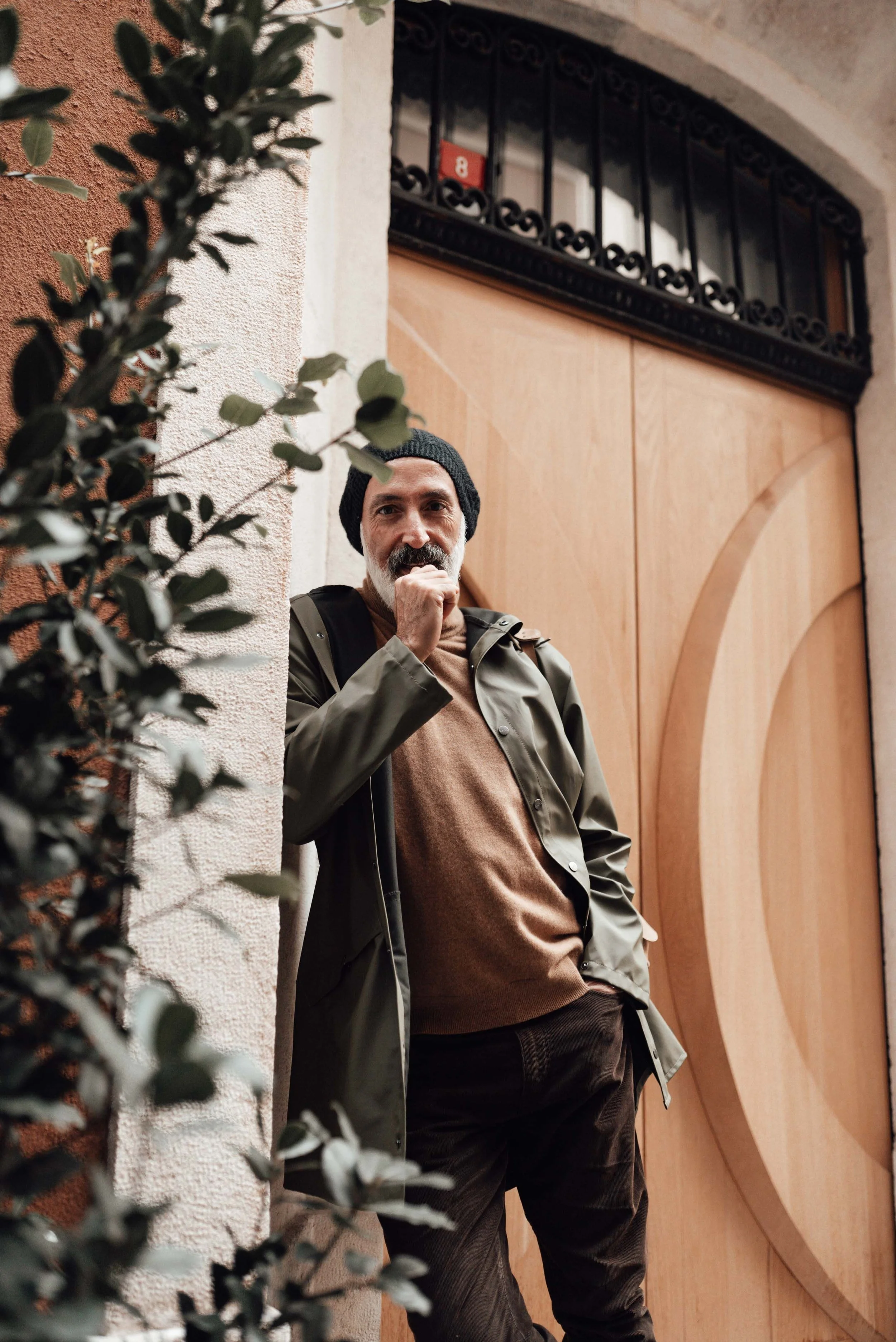
Therapy for men in Brooklyn: making space to move beyond “I can handle it myself” and toward connection and support.
The armor: heavy, and it didn't come from nowhere
Los hombres no lloran. Men don't cry.
Where did you learn that handling it alone is what makes you a man?
Maybe when you were little. You'd cry, and the older men around you, your dad, brothers, uncles, would say: man up. Don't be a little bitch. You were taught to suppress it. To stop feeling. To be “strong”. Maybe you even heard: tú eres el hombre de la casa. You're the man of the house, and the permission to feel gets even smaller as the burden and responsibility of “being the man” gets bigger.
It got reaffirmed your whole life. Being stoic earned respect. So the armor stayed on...
And the armor worked!
When tragedy hit the family, being strong meant holding it together while everyone else fell apart. When someone picked a fight, you didn't stand down. The armor shielded you from ridicule. It protected you.
Es armadura. Y la armadura pesa. It's armor. And armor is heavy.
The armor makes sense when you see what it was built to survive. In interviews with thirteen Latino men, pressure to stay in control made it harder to recognize depression and seek care, but honesty, courage, and responsibility pulled them toward it (Swetlitz et al., 2024). The same values the armor protects point toward help. Getting help is how you live up to those values.
But that hardness and armor didn't start with you. Discrimination can push Latino men toward harder machismo when they feel powerless. So this hardness and armor comes from prejudices & oppressions we deal with in day to day life (Hendy et al., 2022). In fact, even the concept of machismo was constructed from the outside: mid-century US researchers adopted the Spanish word and turned it into a pathologizing category applied to "Latin" men (Cowan, 2017). And we bought into it.
So if hardness is all you've known, what's the alternative? Researchers call the other side caballerismo: family-centeredness, responsibility, emotional connectedness (Arciniega et al., 2008). In Latino men, it predicts well-being (Estrada & Arciniega, 2015). These are values that are rooted in our Latino cultures. We can tap into them, and we need to tap into them, because la cultura sana, the culture heals. And in our culture, we find true strength by tending and caring.
The research backs this up. In one major review, therapy built for a specific culture worked about four times better than therapy offered to mixed groups, and therapy in clients' native language worked twice as well as therapy in English (Griner & Smith, 2006). Care that speaks your language isn't a luxury. A later review confirmed the benefit and found that clients' ratings of their therapist's cultural competence tracked closely with treatment outcomes (Soto et al., 2018).
You might be wondering why we are talking about culture in a piece about therapy. Here is why. The armor was taught by culture, and the way out is carried by culture too. The same lineage that handed you the weight also handed you what lifts it.

Connection can begin side by side.
What you already carry: the pivot
In Puerto Rico, the expectation goes something like this: el hombre que provee, que no se queja, que aguanta; el que resuelve. (The man who provides, who doesn't complain, who endures; the one who fixes). But this expectation just perpetuates the loneliness and isolation. Dra. Marilia Padua, a Puerto Rican psychologist, offers a reframe: Soy fuerte, pero puedo sentir. I'm strong, but I can feel (Conecta Puerto Rico, 2026).
You may or may not have spent much time with your grandparents. But maybe you remember someone who tended the land. A grandfather with an orchard. An uncle with a garden out back. A neighbor with chickens. A dad who fixed everything instead of throwing it away.
You remember food they grew on the table that same day. Nothing wasted. Everything had a use. Cuidar, tending and caring, was a way of life. It's already in your lineage. You're not being asked to become someone new. You're being asked to remember someone old.
This is not new ground. In a survey of 300 Mexican-heritage fathers, the most common way dads spent their spare time was outdoor chores, mowing the yard, planting trees, fixing cars (McClendon et al., 2021). And in a California program that paired home gardening with nutrition education, mostly Latino participants reported better mental health and stress management, and said pride in their gardens motivated them to take better care of their health (Palar et al., 2019). Tending is already in the rhythm. It already heals.
So the land is not foreign ground. It is home ground. And that is what makes it a doorway. Therapy does not have to start in a room. It can start where your hands already know what to do.
The land as the doorway: what it actually looks like
Imagine a therapy like this.
You already know what it feels like to be outside with your hands busy and your mind settling. Mowing the yard. Watering the plants. Fixing something instead of throwing it away. Now imagine that feeling, with someone walking beside you, listening.
You get out of the car at the park. The therapist is waiting. You meet up.
First, an invitation: imagine you're entering a portal, a different world, with other life forms you may interact with.
Then you walk. Side by side on a narrow trail. Chatting, casual. No constant eye contact. No pressure to perform.
Is this therapy?
You notice what's around you. Deer. Birds. The therapist stops to teach you about a plant, how Indigenous peoples used it, and it gives you a sense of usefulness: you know how to interact with what's around you. You listen to the stories of the land. Sometimes they help you understand yourself better.
You find a place to sit. Talk a while. Listen to the sounds. Stretch, move your body, feel strong.
No couch. No clipboard. No one demanding you talk about your feelings on command.
Here's the through line. The land works as a doorway because it was never separate from our culture to begin with. Tending, cuidar, growing food, being outside: that was life, not leisure. So walking into therapy on a trail doesn't ask you to become someone new. It meets you where your people already were.
The research on this format is growing, and it points the same way. In a randomised pilot trial, 37 men with low mood received either walk-and-talk therapy or conventional indoor therapy; both groups improved similarly on depressive symptoms, but the walk-and-talk group reported greater improvements in overall distress, anxiety, and stress, and rated the therapy as highly acceptable (Dickmeyer et al., 2025). Part of the draw may be the format itself: walking shoulder to shoulder reduces eye contact, which may feel less formal and interrogative when discussing sensitive topics (Dickmeyer et al., 2025). A systematic review of 50 studies found that nature-based interventions improved depressive mood, anxiety, and positive affect, including in people with pre-existing mental health problems (Coventry et al., 2021). The most effective programs ran 8 to 12 weeks, with 20 to 90 minutes per session (Coventry et al., 2021). What the research gives us so far is the pieces: the walking format works, and nature-based work helps. The practice that brings them together, with the land as part of the therapy itself, is the frontier.
There's also a theory for why the land works this way. In Sweden, twenty people carrying anxiety, depression, or exhaustion went through a 24-week program on a farm, in forests, and with horses. The program's participants had received psychiatric care for an average of nearly a decade. The researchers concluded that recovery started in the body first, then got reflected on, then got carried home. One participant said a forest walk felt "as if you inject a bit of the forest into your veins" (Gudmundsson et al., 2026).
The possibilities widen from there. In Denver and Aurora, researchers ran the first randomized trial of community gardening: 291 adults, more than a third Hispanic. The gardeners' stress and anxiety dropped, most in those who started out the most stressed or anxious (Litt et al., 2023). A 2025 review of 23 studies and 4,500 adults found gardening's clearest payoff was mental health, and that finding strengthened and became significant when the weakest studies were removed (Wang & Boros, 2025).
And connecting with nature doesn't always have to happen outdoors. It can happen through art, through making something with your hands, through the images that surface when you finally slow down. That's Juanita's doorway: art therapy. Different doorways. One goal.
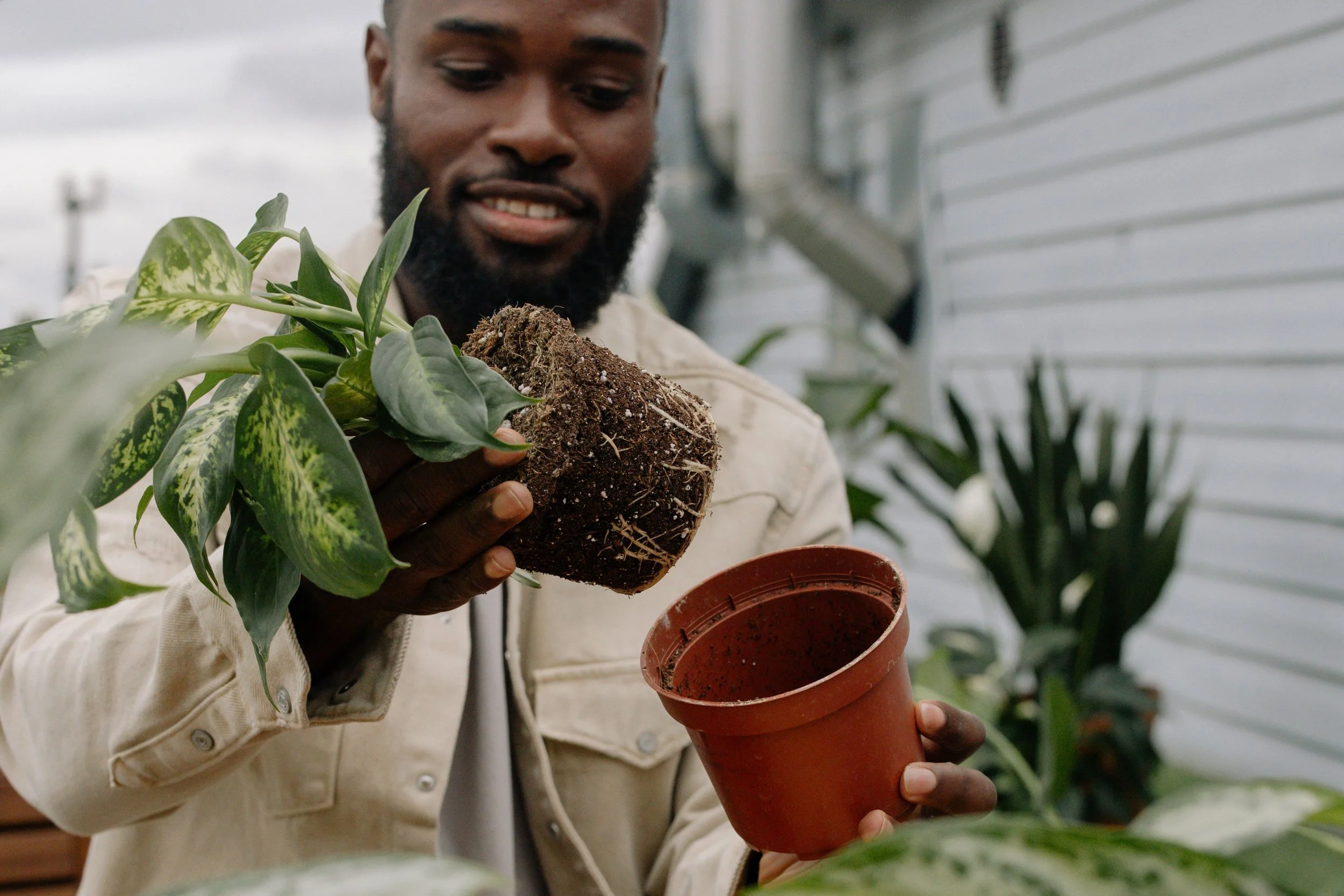
Healing through creativity, culture, and connection to the land.
DIFFERENT DOORWAYS. ONE GOAL.
You're not broken, you just need space to integrate. You're a cycle-breaker considering a different doorway.
If something still feels stuck, the smallest step doesn't have to feel like a leap. Search for therapists in your area. You can't fail at a search. Save a number in your phone without calling. Text someone you trust: ask if they've ever tried therapy before to get their insights and to borrow their courage.
True strength sounds something like this: no estoy bien y necesito hablar con alguien. I'm not okay and I need to talk to someone.
Échale ganas is no substitute for professional help. What helps is a conversation, and you don't have to commit to anything just yet. I know it can feel like a big step to call a therapist, but I'll make it easy: book a free 15-minute consultation and talk about which doorway fits.
If you're in New York, book with Juanita. If you're in California or Texas, book with me, Javier.
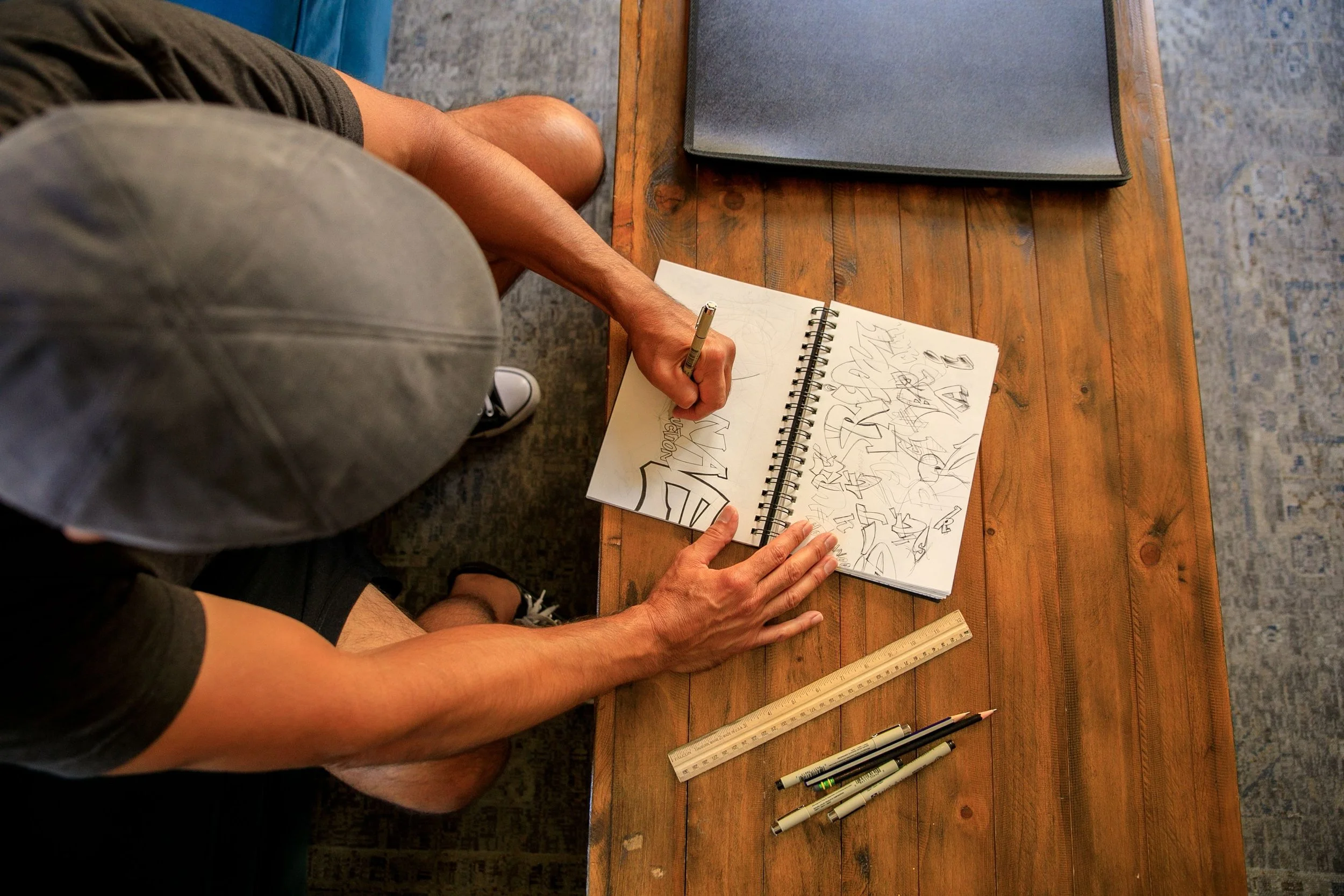
Art therapy in Brooklyn: a creative doorway into trauma therapy for men.
More than one in five Hispanic adults ages 18 to 64 in the US has no health insurance, the highest rate of any group (CDC, 2026). That's part of why the consult is free. So my question to you is this: will you consider having a conversation with either of us? Just a conversation, no strings attached, no commitment necessary, unless you’re ready.
Here's what I want you to remember: You already know how to tend things. You've been tending your family, your responsibilities, everyone around you, your whole life. Cuidar es lo tuyo, caring is your thing. Now let something care for you.
Different doorways. One goal. Yours is waiting whenever you're ready.
Guest author: Javier Omar Meléndez-Vega, LCSW, nature-based somatic therapy, Eutierria Therapy.
About the author: Javier Omar Meléndez-Vega, LCSW, is a licensed clinical social worker in San Antonio, Texas, and the founder of Eutierria Therapy, where nature-based somatic therapy sits at the heart of the practice. A Boricua therapist, he approaches healing through a decolonial, earth-based lens. He also leads Eutierria Connection, a virtual community for decolonial healing.
References
Arciniega, G. M., Anderson, T. C., Tovar-Blank, Z. G., & Tracey, T. J. G. (2008). Toward a fuller conception of machismo: Development of a traditional machismo and caballerismo scale. Journal of Counseling Psychology, 55(1), 19–33. https://doi.org/10.1037/0022-0167.55.1.19
Centers for Disease Control and Prevention. (2026). Health insurance coverage: Early release of estimates from the National Health Interview Survey, 2025. National Center for Health Statistics. https://www.cdc.gov/nchs/pressroom/releases/20260528.html
Conecta Puerto Rico. (2026, October 5). "Soy fuerte, pero puedo sentir": La conversación sobre la salud mental de los hombres que Puerto Rico necesita tener. ConectaPR Radio. https://www.conectaprradio.com/post/soy-fuerte-pero-puedo-sentir-la-conversaci%C3%B3n-sobre-la-salud-mental-de-los-hombres-que-puerto-ric
Coventry, P. A., Brown, J. V. E., Pervin, J., Brabyn, S., Pateman, R., Breedvelt, J., Gilbody, S., Stancliffe, R., McEachan, R., & White, P. C. L. (2021). Nature-based outdoor activities for mental and physical health: Systematic review and meta-analysis. SSM - Population Health, 16, 100934. https://doi.org/10.1016/j.ssmph.2021.100934
Cowan, B. A. (2017). How machismo got its spurs—in English: Social science, Cold War imperialism, and the ethnicization of hypermasculinity. Latin American Research Review, 52(4), 606–622. https://doi.org/10.25222/larr.100
Cox, D. A. (2021). The state of American friendship: Change, challenges, and loss. American Enterprise Institute. https://www.aei.org/research-products/report/the-state-of-american-friendship-change-challenges-and-loss
Dickmeyer, A., Smith, J. J., Halpin, S., McMullen, S., Drew, R., Morgan, P., Valkenborghs, S., Kay-Lambkin, F., & Young, M. D. (2025). Walk-and-talk therapy versus conventional indoor therapy for men with low mood: A randomised pilot study. Clinical Psychology & Psychotherapy, 32(1), e70035. https://doi.org/10.1002/cpp.70035
Estrada, F., & Arciniega, G. M. (2015). Positive masculinity among Latino men and the direct and indirect effects on well-being. Journal of Multicultural Counseling and Development, 43(3), 191–205. https://doi.org/10.1002/jmcd.12014
Griner, D., & Smith, T. B. (2006). Culturally adapted mental health intervention: A meta-analytic review. Psychotherapy: Theory, Research, Practice, Training, 43(4), 531–548. https://doi.org/10.1037/0033-3204.43.4.531
Gudmundsson, M., Pálsdóttir, A. M., Sutton, D., Bejerholm, U., & Argentzell, E. (2026). "An embodied journey towards recovery": A grounded theory of mental health service users' experiences of a nature-based intervention. Scandinavian Journal of Occupational Therapy, 33(1), 3. https://doi.org/10.1007/s44474-026-00003-5
Hendy, H. M., Can, S. H., & Heep, H. (2022). Machismo and caballerismo linked with perceived social discrimination and powerlessness in U.S. Latino men. Journal of Cross-Cultural Psychology, 53(1), 109–121. https://doi.org/10.1177/00220221211054206
Litt, J. S., Alaimo, K., Harrall, K. K., Hamman, R. F., Hébert, J. R., Hurley, T. G., Leiferman, J. A., Li, K., Villalobos, A., Coringrato, E., Courtney, J. B., Payton, M., & Glueck, D. H. (2023). Effects of a community gardening intervention on diet, physical activity, and anthropometry outcomes in the USA (CAPS): An observer-blind, randomised controlled trial. The Lancet Planetary Health, 7(1), e23–e32. https://doi.org/10.1016/S2542-5196(22)00303-5
McClendon, M. E., Umstattd Meyer, M. R., Prochnow, T., Ylitalo, K. R., Meyer, A. R., Bridges Hamilton, C. N., & Sharkey, J. R. (2021). ¿Qué pasa con papá? Exploring paternal responsibilities and physical activity in Mexican-heritage families. International Journal of Environmental Research and Public Health, 18(16), 8618. https://doi.org/10.3390/ijerph18168618
Palar, K., Lemus Hufstedler, E., Hernandez, K., Chang, A., Ferguson, L., Lozano, R., & Weiser, S. D. (2019). Nutrition and health improvements after participation in an urban home garden program. Journal of Nutrition Education and Behavior, 51(9), 1037–1046. https://doi.org/10.1016/j.jneb.2019.06.028
Soto, A., Smith, T. B., Griner, D., Domenech Rodríguez, M., & Bernal, G. (2018). Cultural adaptations and therapist multicultural competence: Two meta-analytic reviews. Journal of Clinical Psychology, 74(11), 1907–1923. https://doi.org/10.1002/jclp.22679
Swetlitz, N., Hinton, L., Rivera, M., Liu, M., Fernandez, A. C., & Garcia, M. E. (2024). Barriers and facilitators to depression care among Latino men in a primary care setting: A qualitative study. BMC Primary Care, 25(1), 30. https://doi.org/10.1186/s12875-024-02275-x
Wang, F., & Boros, S. (2025). Effect of gardening activities on domains of health: A systematic review and meta-analysis. BMC Public Health, 25, 1102. https://doi.org/10.1186/s12889-025-22263-9
Wang, X., Ma, H., Heianza, Y., Liang, Z., Franco, O. H., & Qi, L. (2026). Associations of loneliness, social isolation and healthy lifestyle with life expectancy free of major physical disease and mental disorder. Nature Communications, 17, 6816. https://doi.org/10.1038/s41467-026-74498-8
Wong, Y. J., Ho, M.-H. R., Wang, S.-Y., & Miller, I. S. K. (2017). Meta-analyses of the relationship between conformity to masculine norms and mental health-related outcomes. Journal of Counseling Psychology, 64(1), 80–93. https://doi.org/10.1037/cou0000176
